KNX
the industry standard.
KNX is the ISO/IEC 14543-3 standard for building automation. Dedicated cabling, devices that interoperate across manufacturers, 20+ years of reliability. At 2Smart House it is the backbone of every project — we choose other technologies only where KNX cable physically cannot be run.
 KNX bus cable · eelectron actuator
One protocol, hundreds of manufacturers, zero vendor lock-in.
KNX is an open standard (ISO/IEC 14543-3) for building automation. Unlike Wi-Fi or Zigbee, KNX uses a dedicated cable (the KNX bus, TP — twisted pair) that connects every device: actuator, sensor, touch panel. Every device on the bus understands every other one, whichever manufacturer made it.
Physically, the system consists of: a power supply (24V DC on the bus), the KNX cable (TP1 — twisted pair), devices (up to 64 per line) and an IP gateway for integration with apps. Devices are programmed with ETS6 — the standard software used by every KNX integrator in the world.
The concrete advantage: you can buy an actuator from Schneider, a sensor from Gewiss, a thermostat from eelectron and a touch panel from BTicino — and they all work together with no adapters, no proprietary hubs and no cloud account. That is what “interoperable” means.
Four concrete advantages.
These are not marketing claims — they are the technical reasons KNX has been the standard on the European professional market for 30+ years.
Reliability
Dedicated cable, no Wi-Fi interference, no congestion on the home router. KNX systems from the 1990s still run today on their original firmware.
Interoperability
Over 500 KNX member manufacturers. Any KNX-certified device works with any other. There is no closed ecosystem.
Scalability
From 10 to 10,000 control points, the same protocol. Add a sensor in five years without rewriting the system.
Vendor independence
Your system can be taken over by any KNX integrator. If we disappear, your ETS configuration remains valid for any other specialist.
Three layers, stacked.
Physical layer — cable
Twisted pair (TP1) or IP. You never see the cable, but it ties every switch, sensor and actuator into one bus network.
Logical layer — addressing
Each device has a physical address (area/line/device). Functions (lighting, climate) are grouped into “group addresses” that link inputs to outputs.
Application layer — ETS
ETS6 is where scenarios, scenes and integrations are programmed. The configuration is kept as a .knxproj file — yours, and exportable.
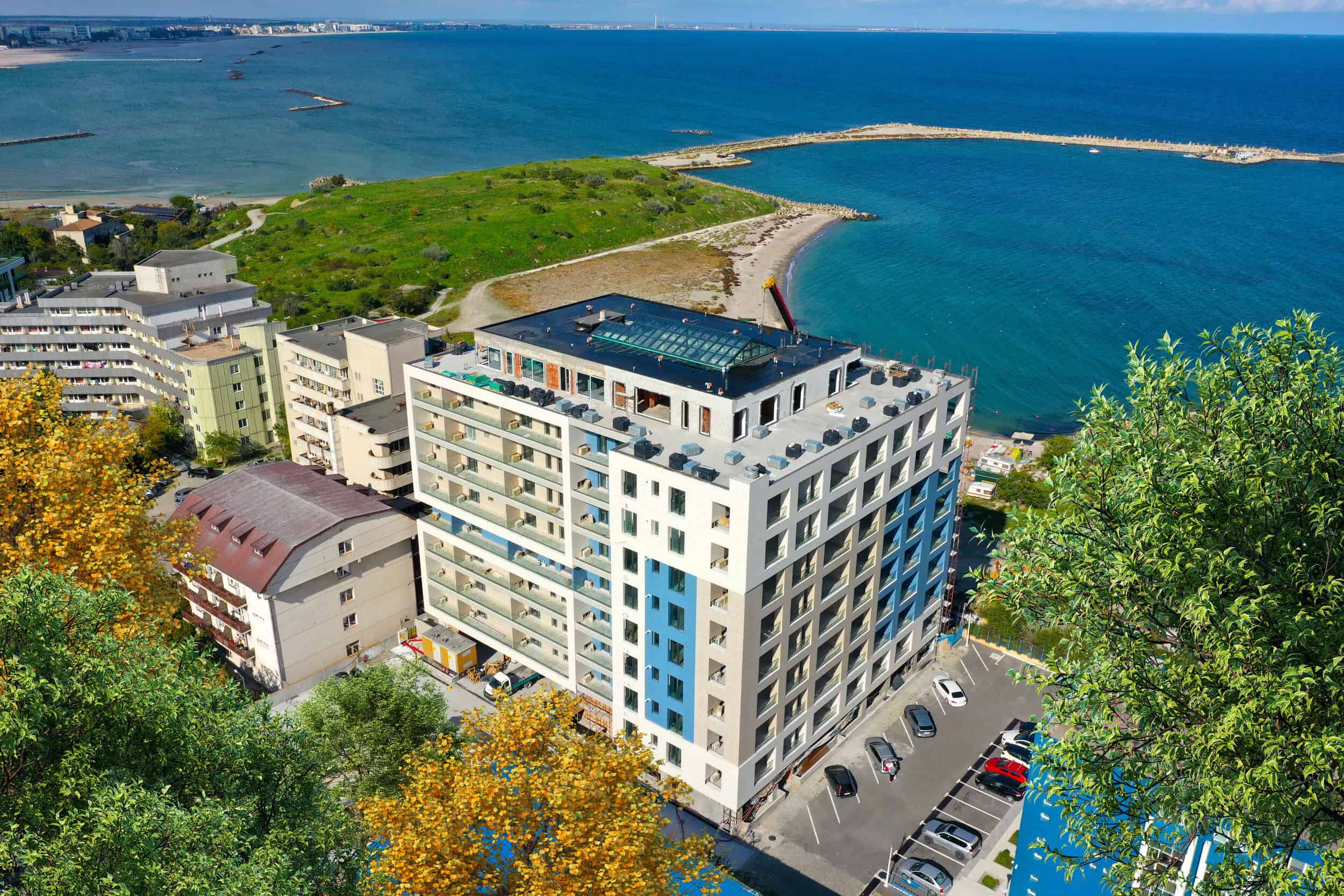
Solid House Faleza Nord
113 apartments with a wired KNX system from the first drawing. Every Smart Ready apartment gets KNX actuators, an IP gateway and a touch panel. Configured per apartment with ETS, scalable per buyer.
What does the technology look like at your scale?
Nine model configurations — from a two-room apartment to a guesthouse — with concrete features and equipment.